Drag to rotate · Scroll to zoomSwipe sideways to rotate · Pinch to zoom
SB-006
Ea-nāṣir Copper Ingot
One-ounce copper bullion bar
- Locality
- Ur, Mesopotamia
- Age
- About 3,750 years old
- Period
- Old Babylonian
The Ingot
A one-ounce bar of copper bullion from the stock of Ea-nāṣir, a merchant of Ur who imported copper from Dilmun in the 18th century BC. It survives sealed in its assay packaging and has not been opened.
Ea-nāṣir is known almost entirely through letters from his customers, and most of them concern the quality of his copper. The best known is a clay tablet in which a customer named Nanni complains that he was offered ingots that were not good and told to take them or leave. This bar should be read alongside it. Its grade has not been independently assayed.
The terms of sale follow the merchant's own. The bar is offered as "quality copper wares from ancient Sumer's most trusted merchant." Complaints must be submitted in writing, on a clay tablet. Nanni is permanently barred from purchase.
The Complaint Tablet
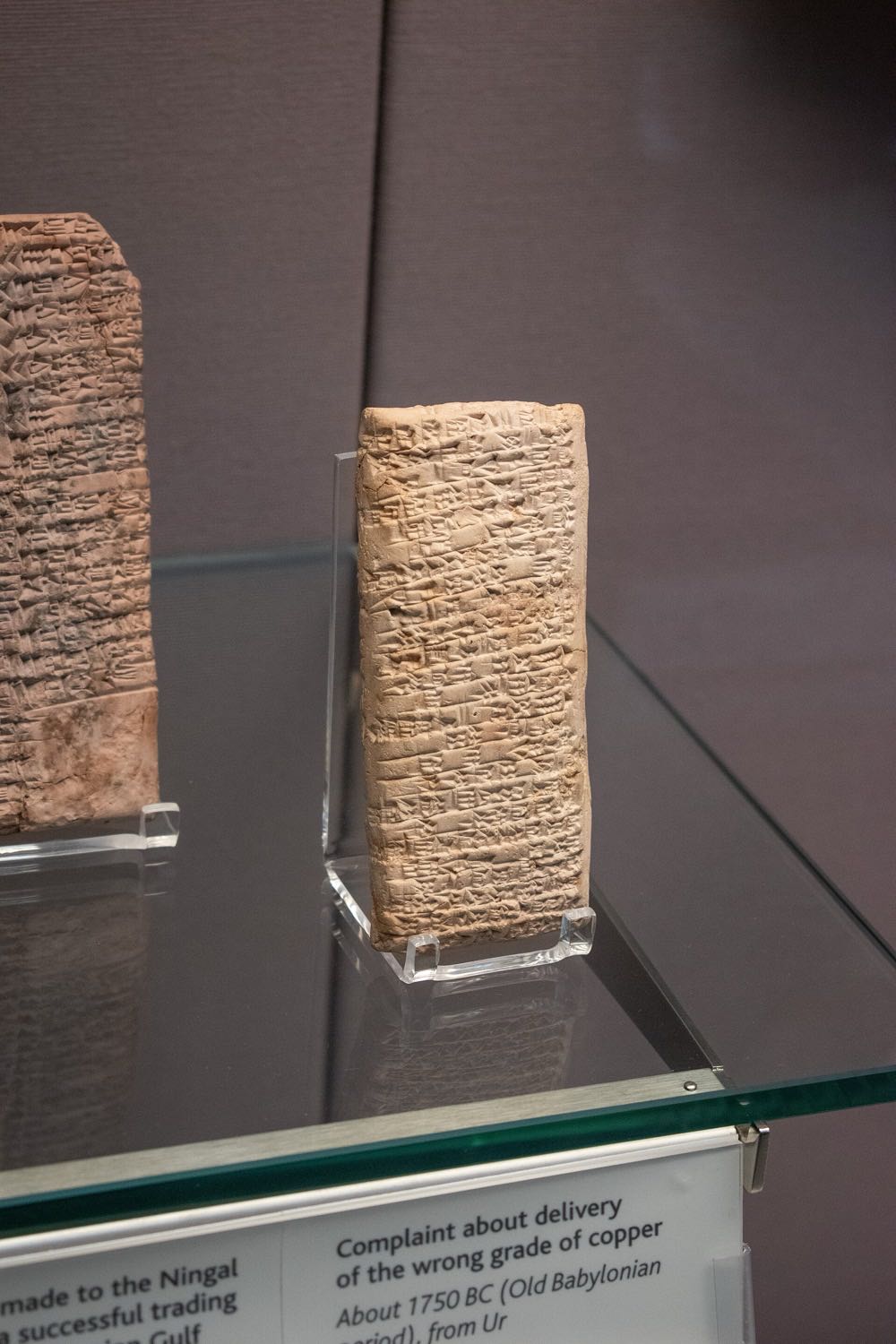
The tablet is a clay slab about 11.6 cm high, 5.0 cm wide and 2.6 cm thick, inscribed in Akkadian cuneiform. The British Museum dates it to about 1750 BC, in the Old Babylonian period, and it comes from Ur. It is held as BM 131236 (UET 5 81). It was found during Sir Leonard Woolley's excavation at Ur, which ran from 1922 to 1934, in ruins believed to be Ea-nāṣir's house.
The text is a letter from Nanni to Ea-nāṣir. Nanni says that Ea-nāṣir had promised him fine-quality copper ingots, to be given to a man named Gimil-Sîn, and had not delivered. When Nanni's messenger, Ṣīt-Sîn, arrived, he was offered ingots that were not good and told, in effect, to take them or leave. Nanni sent further messengers to collect the bag of money he had left with Ea-nāṣir, and they were sent back empty-handed, he writes, several times.
Nanni asks whether any other merchant who trades with Telmun has treated him this way, and in A. Leo Oppenheim's translation adds, "You alone treat my messenger with contempt!" He says that Ea-nāṣir feels free to speak on account of one trifling mina of silver that Nanni owes him; Oppenheim marks "owe" with a question mark. Nanni says he has given 1,080 pounds of copper to the palace on Ea-nāṣir's behalf. The letter ends with a demand that his money be returned in full and a warning that he will accept no copper that is not of fine quality. From now on, he will select the ingots one by one in his own yard and will exercise his right to reject them.
Oppenheim published a full translation in 1967 in Letters from Mesopotamia; later translations differ in detail. The tablet has been on display in Room 56 of the British Museum, with a label reading "Complaint about delivery of the wrong grade of copper."

Ea-nāṣir and the Dilmun Trade
Ea-nāṣir is known from tablets found in a house at Ur, believed to have been his, that Woolley's team designated 1 Old Street. Texts that mention him are dated to the reign of Rim-Sîn I, king of Larsa. He belonged to a group of merchants called alik Tilmun, "those who go to Dilmun." Other tablets in the house record complaints from Arbituram, who had not received his copper, and from a writer tired of receiving poor copper again and again.
Dilmun, centred on Bahrain, was a trading power in the Persian Gulf. Most of the copper traded there came from Magan, in south-eastern Arabia. Merchants such as Ea-nāṣir bought the metal in Dilmun and shipped it up the Gulf to Ur as ingots.


Ur in the Old Babylonian Period
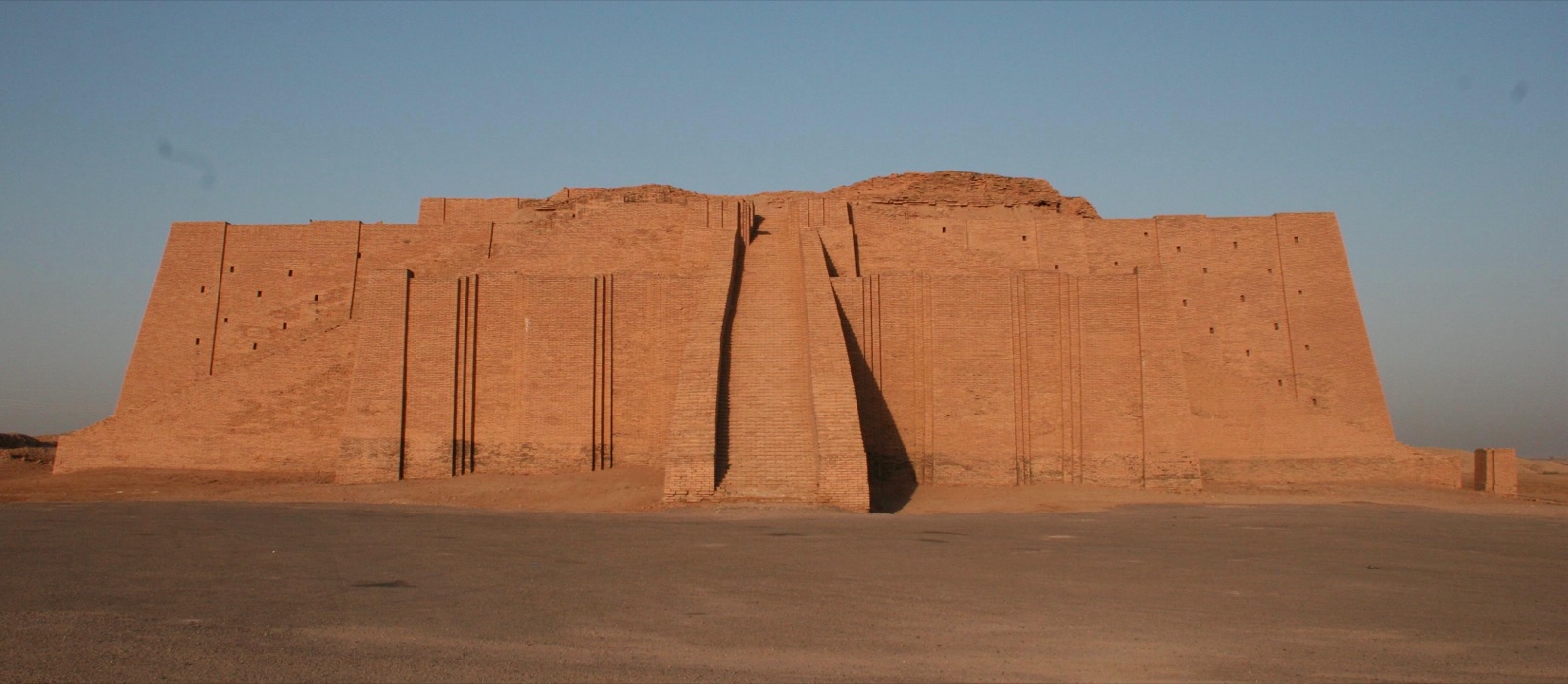
Ur lies at Tell el-Muqayyar, in southern Iraq. Its patron deity was the moon god Nanna, and the Great Ziggurat that still stands there was built for Nanna by Ur-Nammu in the 21st century BC. By the Old Babylonian period Ur was a southern city under the kings of Larsa. It came under Babylon in the time of Hammurabi and was abandoned during the reign of his successor, Samsu-iluna.

Later Reputation
Since 2015, when a photograph of its case circulated widely online, the tablet has often been described as the oldest written customer complaint, and Guinness World Records lists it under that title. It is not the only one; Ur has yielded other letters of complaint, several addressed to the same merchant.
No portrait of Ea-nāṣir survives. A statue of a standing worshipper from the Tell Asmar Hoard is often used to depict him, although it is about a thousand years older than the tablet and has no known connection to him.
Ea-nāṣir's reply to Nanni, if he wrote one, has not been found. The dispute remains open.
Provenance
Acquired from Legboot. The seller describes the copper as "exceedingly standard grade" and offers a satisfaction guarantee, an assurance Ea-nāṣir's customers did not receive. Reviews of the bar are divided. Several of the lowest are signed by Nanni.